Sunday, October 10, 2010

The sweeter side of Berlin


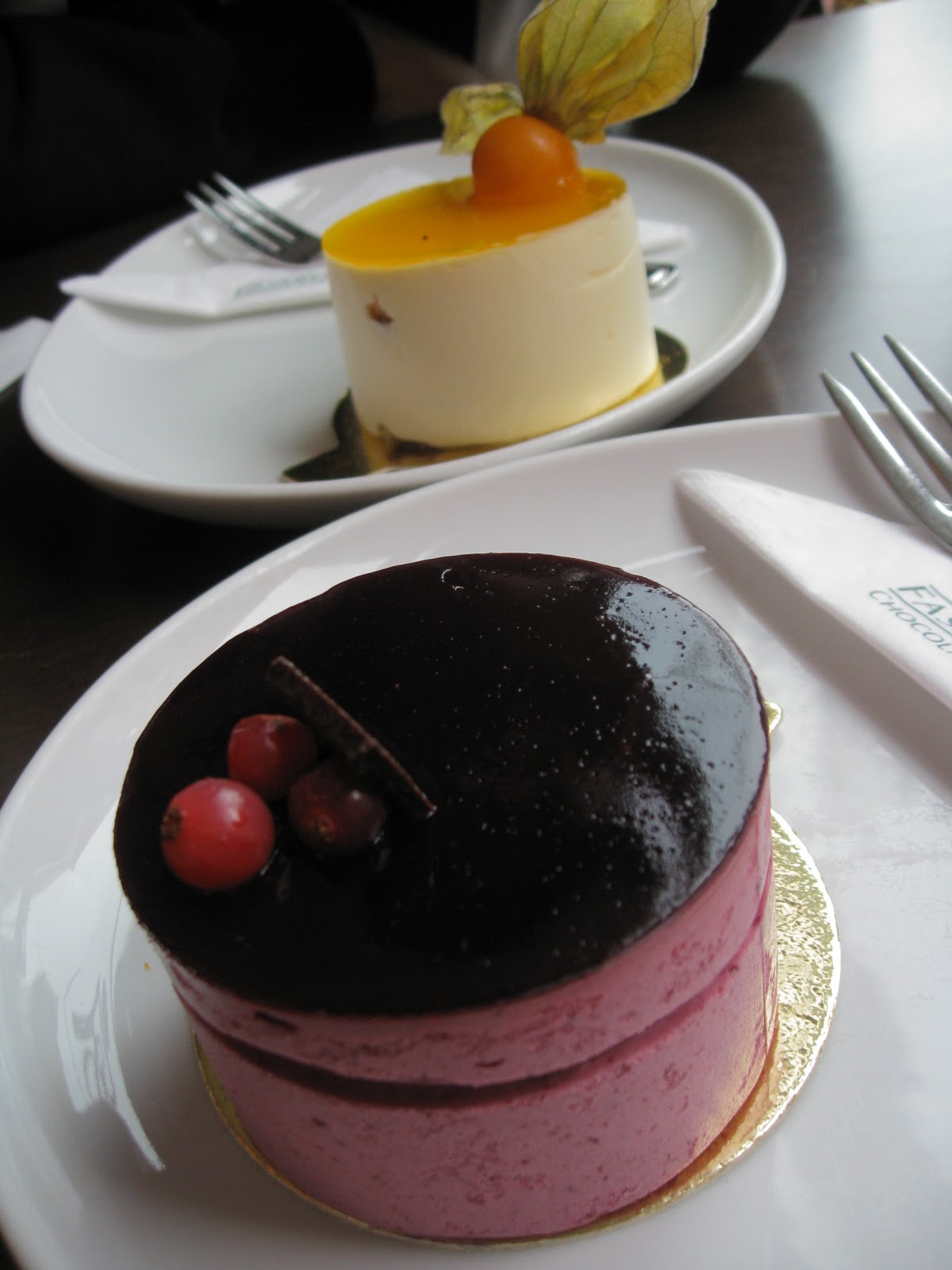
Of course when I heard there was a two-storey gourmet chocolate shop in Berlin I had to track it down. 

And I was definitely glad I did!  Not only were there chocolate fountains and numerous giant sculptures on display, but there were also plenty of tasty chocolates for sale.


Oh, and did I mention the chocolate cafĂ© upstairs filled with all sorts of tasty desserts??  YUM.


Not your typical art gallery...

Over the years many artists have left their mark on the Berlin Wall.
When the wall came down in 1989 artists gathered in droves to transform the East side of the structure which had previously been untouchable.

In recent times many of the same artists have returned to repaint their original sections of the wall to coincide with the 10th anniversary of unified Germany (many of the earlier works had faded, cracked or peeled off the wall).

The result is East Side Gallery, a colourful assortment of public art spanning 1.3km.

Over 100 paintings by artists from all over the world cover this memorial for freedom, making it the largest open air gallery in the world. And there's something for everyone, from peace doves to superheroes and kissing politicians.


Crossing the street has never been so much fun!

When East and West Germany were still separate entities they each had different types of traffic lights.

When the wall came down in 1989 the two cities gradually merged into one, but one thing that still remains is the differing traffic lights.

As a result Ampelmann – a cheerful, hat-wearing character who has come to represent the red and green traffic man from former East Berlin -- has become a national icon. There are shops dedicated to Ampelman. Tourists love him, and enjoy the chance to see different traffic lights depending on which part of the city they visit (traffic lights in former West Berlin use a more generic human figure). He even has his own website. www.ampelmann.de

Saturday, October 9, 2010

Walking a mile in someone else's shoes


During WWII, prisoners at Sachsenhausen Concentration Camp were forced to don workboots and run for hours around a rocky jogging track. The men (usually gays or jews) were given random pairs of shoes, with no regard for size, and forced at gunpoint to run the track (pictured above) in a bid to test the durability of various materials used to make workboots for soldiers. Those who couldn't last the distance were brutally bashed or killed by prison guards, and those who survived usually ended up with severe deformities.

It is just one of the many sad tales from behind the gates of Sachsenhausen, near Berlin, where about 30,000 inmates died from exhaustion, disease, malnutrition or pneumonia during the war. Others were executed or died as the result of brutal medical experimentation.


Friday, October 8, 2010

Singing the praises of Prague


Meet George – one of a handful of accomplished trumpeters whose music rings out across Prague each day.

Ever hour on the hour, from 9am-9pm, George stands on the blacony at the top of the city's famous Astronomical Clock and plays his trumpet, much to the delight of the crowds below.

The marketing and zoology student, aged in his early 20s, is clearly passionate about his part time job and wears a huge grin as he waves enthusiastically to his fans.  He also makes it his business to chat to tourists like us about his work and the amazing view from his ``office``.


The clock tower is close to many of the other sites of Prague, which is an easy city to get around on foot.


And, like many European cities, it looks even better at night.


Armed and ready in Prague.

When visiting Prague, Budapest and Berlin I expected I’d learn plenty about the rise and fall of communism.  But I never imagined I’d be standing in a nuclear bunker, 16 metres below the ground, wearing an army uniform and clutching a machine gun.

Some might consider dress-ups and role playing distasteful or offensive, but many European historians and educators believe it's an important way to educate people about the horrors of the past to ensure history doesn't repeat itself. 

There are well over 350 underground bunkers in the Czech Republic (some believe there are as many as 700) and the one we visited is still fully-functional.  Not only is it equipped to house as many as 5000 people in an emergency but it also plays host to regular underground music events.


Tours of this bunker have been running for about a year.  Our tour guide, John, runs tours in between classes at university.
As part of the tour we got to see how the bunker works and enjoy a beer underground. Trying on the gas masks, hats and other military gear was definitely a lot of fun, especially for Bryan...


Thursday, October 7, 2010

It's Hungary. Not hungry.


You’ll never go hungry in Hungary. Especially if you visit the all-you-can-eat cake buffet at the Marriott Hotel in the heart of Budapest, which is nestled on the banks of the Danube.

Here diners are confronted with rows of fabulous-looking cakes, flans, strudels, chocolates, mousse cups and cookies, all laid out on tiny trays in tasty bite-sized portions.


Add to that fruit, cream and vanilla and chocolate sauces (plus unlimited sparkling wine and a free cup of tea or coffee -- or in our case hot chocolate -- all for just 10 euro) and it really is heaven for any sweet tooth.

Needless to say after seeing the spread on offer I promptly handed over my cash and was not disappointed.  Even Bryan, who is not such a sucker for sweets, was impressed and between us we managed to sample every dessert on offer.

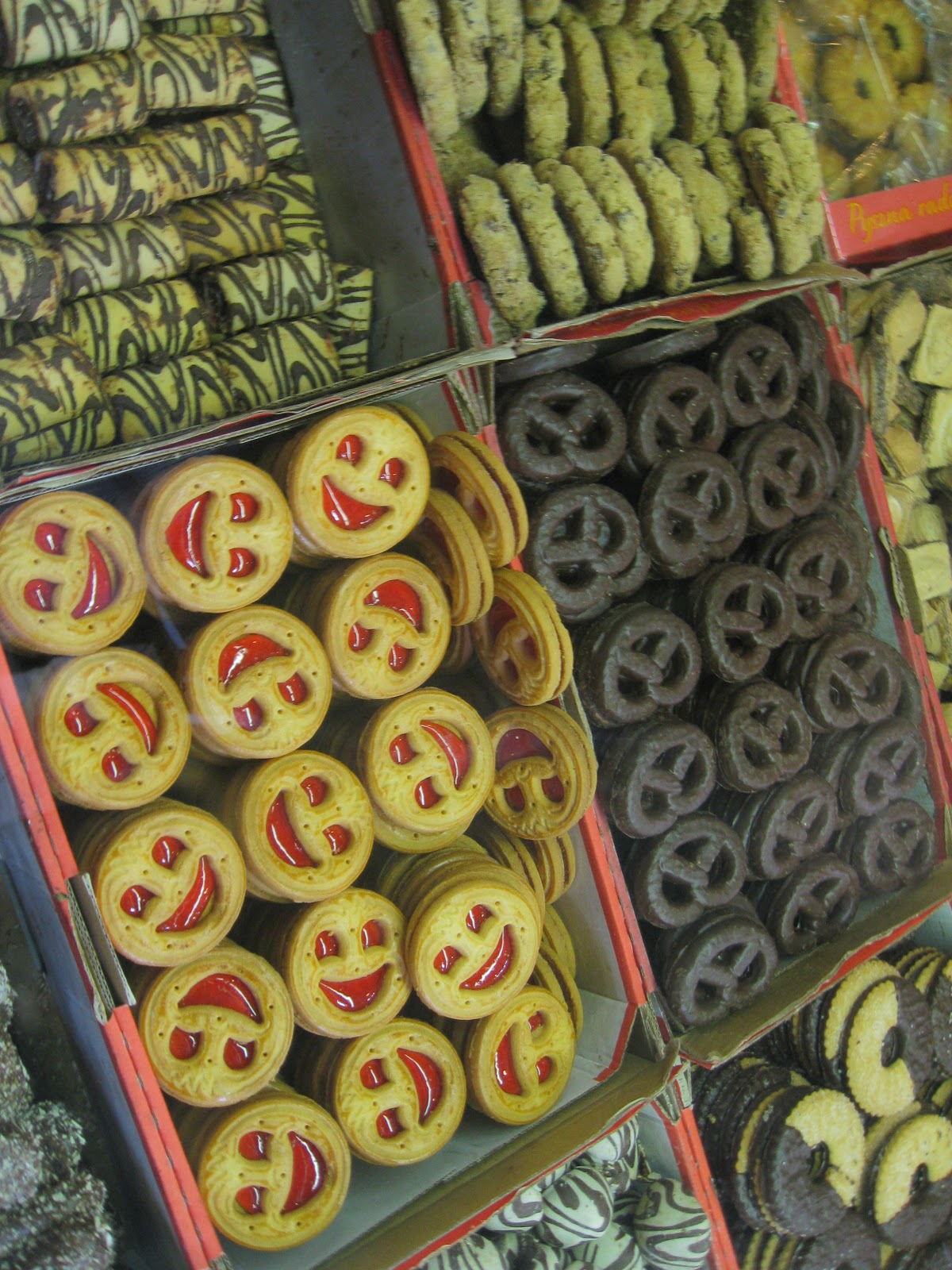
The only downside was that we didn’t have room for all the yummy cakes we saw at the local market...